
Have you ever bought a piece of shapewear with high hopes, only to find it either suffocatingly tight or “strapped” at the waist?
We’ve all been misled by brand sizing guides. The truth is, due to differences in different types of shapewear and fabrics, compression levels vary widely. Choosing the wrong size not only fails to achieve the desired shaping effect but can also lead to health risks such as digestive problems.
Check the uniformity of compression levels.
A high-quality shapewear piece should be like a sculpture carefully designed for you, not a tube that squeezes fat.
To avoid the sausage effect and fat displacement, true shapewear provides a smooth, even compression level designed to optimize your body contours. If it’s too small or the compression level is too concentrated, it will only squeeze fat into other unprotected areas of the body, creating an unsightly spillover effect.
Observation points: underarms, above knees, groin, and below chest.
Judgment criteria: Skin should not visibly bulge from any edge of the shapewear. If it does, it indicates that the compression level of the shapewear is not suitable for your body type.
Lower back test: Bend over or sit down. If the edge of the lower back immediately curls or slips off, the lower back compression level is incorrect, and you may need a model with an anti-slip strip design.
Assess the freedom of breathing and movement
“For beauty, I’d rather sacrifice a little bit of breathing.” — This is a dangerous myth.
Shapewear, even at high intensity, should never make you feel chest tightness or have difficulty breathing deeply. If it forces you to breathe shallowly, it’s putting unnecessary stress on your internal organs, which is directly related to health risks.
Breathing test: After putting it on, try taking a deep, slow abdominal breath. If you feel excessive compression in your ribs or stomach, immediately change to a larger size.
Activity Test: Extend your arms, raise your legs, and twist your waist. A good piece should allow you to perform these simple activities without feeling any sharp stretching. Remember, you need to feel comfortable wearing them all day.
Edges and seams of seamless shapewear
Shapewear lies in its ability to accomplish its task invisibly. If it leaves marks under your clothing, it has failed.
Creating an invisible effect
When making your selection, you must ensure that it will not leave any marks under your outer clothing. This is especially true for seamless shapewear.
Fitting Experience in Practice: Fit Indicators
Clothing observation: Wear the tightest dress or shirt you want to match and observe.
Judgment criteria: The edges of the thighs, waist seams, and hip lines must be smooth. High-quality seamless shapewear typically uses laser-cut edges to ensure there are no visible seams.
Back check: Ask a friend to help you check your back or look in a mirror. If the fabric is overstretched, it may show the bra lines or the top edge of .
Focus on the comfort of the shoulder straps and crotch of full-body shapewear.
For one-piece styles like full-body shapewear, the shoulder straps and crotch are key to whether you can wear it comfortably for an extended period of time.
Fitting experience and fit criteria:
Shoulder straps: Check if the shoulder straps are too tight on your shoulders or leave red marks. If you have to adjust the shoulder straps to the tightest setting to get support, it means your torso may be too long for you.
Crotch Design: Check the crotch design of the shapewear. For those with openings, the openings should be positioned appropriately to facilitate toileting without causing friction or discomfort while walking.
Length test: If the fabric bunches up at the crotch, the torso is too long; if there is a continuous pulling sensation at the crotch, the torso is too short. Ill-fitting full-body will make your fitting experience miserable.
Stability and anti-rolling after walking test
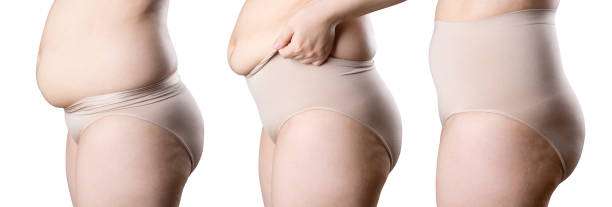
A good piece of shapewear should stay in place when you move, like a second skin.
Continuous shaping ability
Its shaping ability should not disappear when you sit or walk. If shapewear shifts during activity, it cannot provide a consistent level of compression and shaping.
Dynamic tests: stepping in place, bending over significantly, sitting down, and standing up.
Judgment criteria: The waist or thigh edges should not curl upwards or downwards (commonly known as “rolling”). Qualified shapewear usually has embedded anti-slip strips (such as silicone bands) to ensure stability.
Purchase tip: If it curls easily, it means either the compression level is too weak, causing it to loosen, or the pressure from your body has forced the overly tight edges to shift.
Summarize:
Successful shapewear shopping is an art but also a science. It requires you to abandon blind reliance on size guides and instead focus on the dynamic experience of trying on the garments.
Master these 5 key fit metrics, and you can avoid common pitfalls when buying. Remember, the best shapewear should provide effective shaping and compression while making you feel comfortable and confident.
Didn’t find the right fit? Check out our selection of quality shapewear!