
expect to “immediately improve their figure,” “become more upright,” and “become more energetic” when they first wear shapewear.
However, many others find that after wearing it for a short time, they begin to feel irritable, depressed, and easily impatient, and even want to take it off immediately.
Is this feeling really just a “psychological effect,” or is your body sending you a warning in another way?
If you’ve had a similar experience, this article aims to help you understand why wearing shapewear can worsen your mood and what you can do to improve it, instead of simply enduring it.
Mood changes are not necessarily a sign that “you are too sensitive.”
When many women talk about the discomfort they experience while wearing shapewear, their first reaction is often self-blame:
- Am I being too dramatic?
- Everyone else can wear it; why can’t I?
- Just bear with it, okay?
But in fact, emotions are part of bodily sensations.
When the body is restricted, oppressed, and breathing becomes shallow, the brain receives not only signals of “improved appearance” but also underlying insecurity.
I’ve been through a phase like that myself: I might look sharp on the outside, but I feel inexplicably irritable inside, and even my tone of voice becomes aggressive. Later, when I took it off, I realized that the feeling of pressure was actually there all along, but I had ignored it.
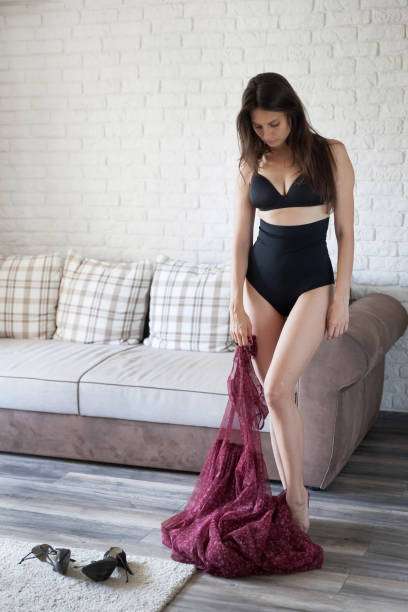
Why does wearing shapewear often worsen one’s mood?
Restricted breathing can directly affect emotional stability.
When the abdomen and ribs are wrapped and tightened for a long time, many people will unconsciously switch to “shallow breathing.”
What are the consequences of shallow breathing?
- Reduced oxygen supply to the brain
- Feeling stuffy head and decreased concentration
- Weakened ability to regulate emotions
This is why some people suddenly feel irritable, anxious, and restless when wearing shapewear.
It’s not that you’re “overthinking,” but rather that your body is genuinely a bit tired.
Prolonged pressure will cause the body to enter a “defense mode.”
The body’s instinctive response to sustained pressure is to increase alertness.
In this state, you might experience:
- More sensitive to external stimuli
- Easier to get angry over trivial matters
- There was a vague feeling of wanting to escape.
This psychological pressure is amplified, especially when one needs to sit for long periods, commute, or work.
The expectation of a “perfect figure” is itself a psychological burden.
Many people wear shapewear not for comfort, but to “look better.”
But when you feel uncomfortable while telling yourself, “I have to wear this to look good,” you’re actually torn inside.
Over time, one’s emotions will naturally become depressed and repressed, and one may even begin to doubt oneself.
An unsuitable size or fit can affect more than just your body.
Not all discomfort comes from “pressure itself”;
Improper sizing and structural design can amplify the problem.
For example:
- The rolled-up hem at the waist makes you constantly pay attention to your body.
- Obvious marks under the armpits or on the abdomen can cause persistent distraction.
- An unsuitable support point can actually increase body tension.
These minor discomforts can gradually turn into emotional burdens.
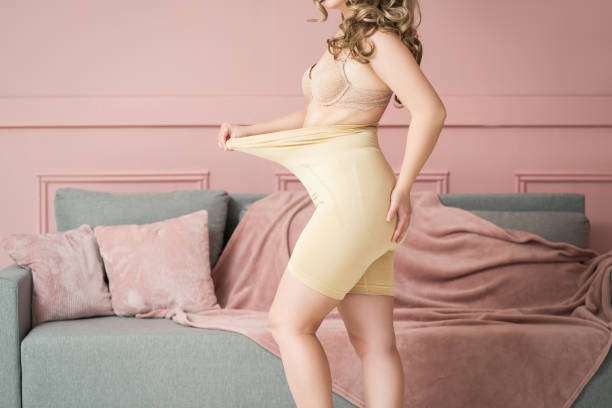
Several common signals your body is “reminding” you
If you experience any of the following while wearing shapewear, it’s recommended that you listen carefully to your body:
- After wearing it for a while, I felt noticeably depressed.
- I started unconsciously adjusting my clothes more and more frequently.
- Breathing becomes shallower, and the neck and shoulders feel tighter
- The first thing I wanted to do when I got home was to take off my clothes immediately.
These are not signs of “lack of willpower,” but rather your body saying, “I need some space.”
How can I make myself feel better without giving up on body shaping?
Not pursuing “the tighter, the better”
The shapewear that is truly suitable for everyday wear does not restrict you but rather provides gentle guidance for your body.
Being able to sit, walk, and breathe naturally is more important than looking a little thinner in a short period of time.
Control the wearing time, rather than relying on it all day.
Especially when you’re just starting out, you can:
- Start from 2–3 hours
- Avoid wearing it for extended periods on already stressful workdays.
- Relax your body promptly after returning home.
Give your body room to adapt, and your emotions will also stabilize.
When you feel uncomfortable, allow yourself to take it off.
This is the most difficult thing for many people to do.
But please remember:
Shapewear is a tool, not a test.
You don’t need to trade discomfort for confidence.
FAQ:
Q1: Wearing shapewear makes me feel worse. Does that mean it’s not suitable for me?
Not necessarily. It could be due to the size, fit, or how long you’ve been wearing it. You can start by adjusting how you wear it.
Q2: Will emotional problems disappear as you get used to them?
Some people will adapt, but if you continue to feel depressed or anxious, it is not recommended to force yourself to endure it.
Q3: Do all shapewear items affect mood?
Not necessarily. Well-designed styles with evenly distributed pressure have a much smaller impact on mood.
Q4: Can I wear it every day?
Whether it’s suitable to wear it every day depends on your body’s feedback, not on other people’s wearing habits.
Summarize:
We wear shapewear to better feel ourselves, not to ignore ourselves.
If a shaping product makes you unhappy, tight, or unable to breathe, then it has lost its purpose.
Shapewear that understands your body’s rhythm, allowing your lines and emotions to be treated gently. When you feel comfortable and emotionally stable, confidence truly stays.
